


requestId:68499a978c2e48.64132611.
Modern meaning of Chinese traditional civilization value concept
Author: Liu Mengxi
Source: Dunhe Foundation
Time: Confucius was the second and second spring day of Dingyou
2017
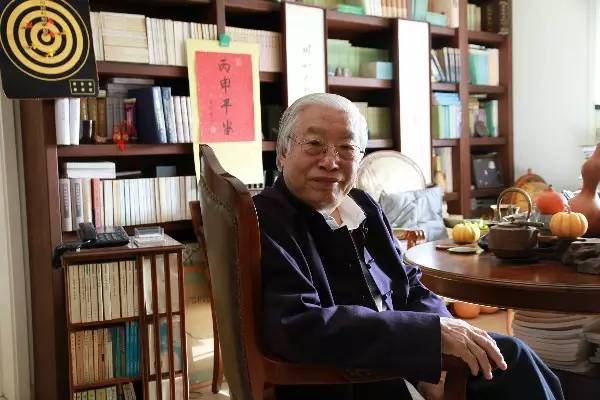
Author introduction: Liu Mengxi, born in 1941, is currently a finalist of the Chinese Art Research Institute, director of the Chinese Civilization Research Institute, and a member of the Center Literature and History Research Center. He is the founder and editor of the magazine “Chinese Civilization”. The purpose of the discussion is to think about the history of civilization, the literary thoughts of the Ming and Qing dynasties and modern academic thoughts, and is a doctoral supervisor of the purpose of the history of Chinese civilization and academic thoughts.
Important works: “Traditional Misread” (1996), “Academic Thoughts and Characters” (2004), “Red Building Dreams and the Centennial China” (2005), “Brief Introduction to Modern Chinese Academics” (2008), “On the National Studies” (2008), “National Studies and Red Studies” (2011), “Chinese Civilization The energy of the madman (2012), “Chen Baozhen and Hunan New Deal” (2012), “Chen Yinke’s Scholarship” (2014), “Traditional and Modern Chinese Changes” (2014), “Ma Yifu and National Studies” (2015), “The Contemporary People’s Reverence” (2015), “The Contemporary Juror’s True Love” (2016), etc.
Theme
The economic development of the country cannot be based on the basic value of civilized civilization. The master knew that China’s economy has stepped into a new development path since the 1979 renovation and opening up, but the real economic growth time should be after the 1992 Dun Xiaoping’s southern tour. In the past 20 years after 1992, China’s economy has developed greatly, making China the second largest economy in the world.
As for civilization, if the master carefully recalls it, he will feel that under the economic boom of more than 20 years, civilization has certainly developed greatly, and many new things have emerged, but the value of civilization and the vulgarity of civilized energy.World-classification is also an uncontested fact. Many people even fell to the foundation of some moral character, becoming bad, beautiful, ugly, and true and false. Not only morality, but some aspects of humanity are also being lost. The problem I am concerned about is, how can the value of civilization, energy and morality be reshaped in the context of economic development? Only when the value tree of morality and energy is established can it be matched with economic development. Therefore, I proposed that the establishment of a strong country cannot be based on the basic value of surviving civilization.
Talk about the topic
Explore those stable, constant and everlasting values in China’s historical civilizations, and study the meanings they can have tomorrow.
Tomorrow’s China is the extension of historical China. The value structure of contemporary society is the value concept of supplementing, absorbing and integrating Chinese traditional civilization. China is a “civilized” country with a long history. There are always some energy values that have not become the past and can continue to be used tomorrow. This is the foundation of civilization that we can settle down. But for a long time, these values have been lost, forgotten, and not understood where they come from. If you don’t understand where you come from, you won’t really understand where you are going.

Teacher Liu Mengxi’s Bookroom
1. Civilization in the perspective of civilization and Chinese civilization
I will first talk about the common problems of civilization theory and some points of view on the comprehensiveness. First, what exactly is civilization; second, China’s twists and turns from tradition to modernity; third, civilization tradition and traditional civilization; fourth, civilization’s major traditions and minor traditions; fifth, the basic characteristics of Chinese civilization.
(I) What is civilization?
When talking about the value concept of Chinese traditional civilization, one of the problems that comes to mind is, what is civilization?
There are many definitions of civilization. In the early 1950s of the last century, american had two brothers of humanists, Kracon and Crober. They wrote a book called “Civilization: An Exploration on Definition”. In this book, they listed more than 160 definitions about civilization in the East. After the 70th century, symbols learned style and had more definitions about civilization. I can’t invent a completely new definition, I can only say what kind of definition I like to apply.
The definition I often apply is that civilization refers to the overall career method of a civilian and its value system.
Civilization has something to do with different people’s life methods, different ethnic groups, and different ethnic groups have different life methods. Just like when we look at some countries in Southeast Asia, their career methods are not completely similar to ours, but there are many similar things, just like they also need to eat, wear clothes, walk, or take a car… These basic functional aspects and target aspects are similar to us, because they are all human life. However, the specific life methods are different from us. The food we eat is incomplete, the clothes we wear are incomplete, and the life habits are incomplete. These are the civilization differences that occur after civilization connects different regions and different groups of people.
There is also a need to be clear about one problem: civilization is not a condensation thing. Suppose that civilization is a structure, which is loose and full of force, not a condensation thing. Civilization cannot be as good as a stone 博官网 can be moved. Civilization is water, it can only flow, it cannot be allowed to move.
(II) The twists and turns of modern travel process
The problems of Chinese civilization I talk about here focus on China’s traditional civilization. The concept of traditional civilization actually makes a plan to distinguish between tradition and modernity. From the late Qing Dynasty to the People’s Republic of China, the transformation of Chinese society has been a process of the transformation of Ye Qiu’s modern society, which is the lowest-achieving process of the transformation of Ye Qiu’s modern society, which is said to be the process of modernization. But this process is still continuing and has not been completed yet. We are still on the road to modern times, which I describe as “people are on the journey.”
There are three major modernization efforts in China’s history over the past century –
1. The first time was in the late Qing Dynasty, and the important thing was the thirty years from 1860 to 1890. This was the period of foreign movement of the Qing Dynasty, and the representative figure was Li Dongzhang. At that time, Li Dongzhang and other officials realized that China was behind, so they advocated learning foreign things, running factories, and buying foreign guns. We can see this process as a preliminary trial of China’s late modernization. Why 1860? Because in that year, the British and French military fired the Yuanmingyuan and the crisis of China’s international exchanges was finally over, the Qing Dynasty began to decide to establish a general government office, which is equivalent to the current international ministry. Before this, the Qing DynastyThe bureau does not take foreigners seriously, but only knows that there is China, not the world, and believes that even if it does not have any relationship with them, it is nothing to say. From 1860 to 1890, 30 years, I counted the whole number, and actually it should be 1894 and 1895. In 1894, the Sino-Japanese War of 1894, and after the end of the war in 1895, the “Majuan Agreement” was signed. The entire Beiyang Navy, which Li Dongzhang had worked hard to establish, was not defeated. At that time, in the eyes of Chinese people, japan (Japan) was just a small country, called it a “small country”, it was a small country like a grass, but this understanding was actually not true. Because japan (Japan) passed the Meiji Vision, the small country has become a strong country. Therefore, it was not occasionally that the Qing Dynasty was defeated by japan (Japanese). The Qing Dynasty itself did not want to change, and the corruption was already at a difficult land to support. The first modernization attempt in China’s history was defeated by japan (Japan) due to the Sino-Japanese War of 1894-1895. Not only did the entire Beiyang fleet run by Xinyao not only repaid the huge white silver, but also cut off China’s No. 1 Baby Island Taiwan to japan (Japan). It was not until the Second World War in 1945 that the

發佈留言